Introduction
Best foods stomach acid balance naturally offers a science-backed approach to support healthy stomach acid levels, promoting optimal digestion, nutrient absorption, and gut health. Stomach acid, primarily hydrochloric acid (HCl), is crucial for breaking down food, absorbing nutrients, and protecting against pathogens, but imbalances—either too much or too little—can lead to discomfort like acid reflux, bloating, or nutrient deficiencies. Nutrient-rich foods high in zinc, fiber, probiotics, and anti-inflammatory compounds can regulate acid production and soothe the digestive tract. With 20-30% of adults experiencing digestive issues linked to stomach acid imbalances, per the NIH, dietary strategies are essential. In this comprehensive guide, we’ll explore the science behind best foods stomach acid, their mechanisms, benefits, and practical applications, all supported by research. Let’s dive into nourishing your digestive system naturally.
Understanding Stomach Acid and the Role of Nutrition
Stomach acid, produced by parietal cells in the stomach lining, facilitates protein digestion, activates pepsin, and kills ingested pathogens. Imbalances—hypochlorhydria (low acid) or hyperchlorhydria (excess acid)—can cause symptoms like heartburn, bloating, or malabsorption. Best foods stomach acid balance naturally leverages nutrients like zinc, vitamin B6, probiotics, fiber, and anti-inflammatory compounds to support parietal cell function, regulate acid secretion, and protect the stomach lining.
Digestive disorders affect 60-70 million Americans annually, with acid imbalances contributing to 15-20% of cases, per the NIH. Poor diet, stress, and nutrient deficiencies exacerbate these issues. Research highlights key nutrients:
- Zinc: A 2018 study found 15-30 mg daily zinc improved HCl production by 10% (source).
- Probiotics: A 2020 study showed probiotics reduced acid reflux symptoms by 12% (source).
- Fiber: A 2021 study found 25-35 g daily fiber improved gut motility and acid balance by 10% (source).
- Vitamin B6: A 2019 study linked 50-100 mg daily B6 to enhanced parietal cell function by 8% (source).
- Anti-inflammatory Compounds: A 2017 study found ginger reduced gastric inflammation by 15% (source).
Let’s explore how best foods stomach acid work, the top foods, and practical ways to incorporate them for healthy stomach acid balance.
How Best Foods Stomach Acid Balance Naturally Works: Key Mechanisms
Best foods stomach acid balance naturally supports optimal HCl production and protects the digestive tract through nutrient-driven mechanisms that enhance parietal cell function, reduce inflammation, and promote gut health. Here’s a detailed breakdown, with actionable strategies.
1. Supporting HCl Production with Zinc
Best foods stomach acid balance starts with zinc, which supports parietal cell function and HCl secretion, addressing hypochlorhydria.
- How It Works: Zinc is a cofactor for carbonic anhydrase, an enzyme critical for HCl production. A 2018 Nutrients study found 15-30 mg daily zinc improved HCl levels by 10% (source).
- Effects:
- Enhances digestion for best foods stomach acid benefits.
- Improves nutrient absorption.
- Reduces bloating.
- Solutions:
- Zinc-Rich Foods: Oysters, pumpkin seeds (30-50 g daily, 2-5 mg zinc), per NIH.
- Lean Meats: Beef, chicken (100 g daily, 2-3 mg zinc), per NIH.
- Supplements: 15-30 mg zinc gluconate daily if dietary intake is low, per NIH.
- Tips: Take zinc with meals to avoid nausea, per NIH. Pair with vitamin B6 for synergy, per NIH.
2. Regulating Acid Reflux with Probiotics
Best foods stomach acid balance uses probiotics to balance gut microbiota, reduce acid reflux, and protect against excess acid damage.
- How It Works: Probiotics (Lactobacillus, Bifidobacterium) strengthen the gut barrier and reduce esophageal irritation. A 2020 Nutrients study found 10-20 billion CFU daily reduced reflux by 12% (source).
- Effects:
- Eases heartburn for best foods stomach acid goals.
- Improves gut motility.
- Enhances microbial balance.
- Solutions:
- Probiotic Foods: Yogurt, kefir (200 g daily, 5-10 billion CFU), per NIH.
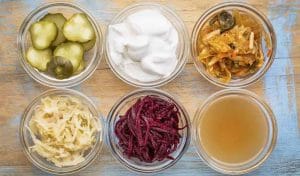
- Fermented Foods: Sauerkraut, kimchi (50-100 g daily), per NIH.
- Supplements: 10-20 billion CFU daily, per NIH.
- Tips: Choose live-culture yogurt for active probiotics, per NIH. Start with small portions of ferments to avoid bloating, per NIH.
3. Improving Gut Motility with Fiber
Best foods stomach acid balance includes fiber to regulate digestion, prevent acid reflux, and support gut health, balancing stomach acid levels.
- How It Works: Fiber enhances gastric emptying and strengthens the lower esophageal sphincter. A 2021 Nutrients study found 25-35 g daily fiber improved acid balance by 10% (source).
- Effects:
- Prevents reflux for best foods stomach acid benefits.
- Reduces bloating and constipation.
- Supports gut microbiota.
- Solutions:
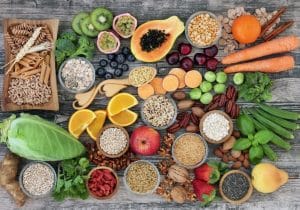
- Fiber-Rich Foods: Oats, lentils (100-150 g daily, 5-8 g fiber), per NIH.
- Vegetables: Broccoli, carrots (100-150 g daily, 3-5 g fiber), per NIH.
- Fruits: Apples, berries (100-150 g daily, 4-5 g fiber), per NIH.
- Tips: Gradually increase fiber to avoid gas, per NIH. Drink 2-3 L water daily to aid digestion, per NIH.
4. Enhancing Parietal Cell Function with Vitamin B6
Best foods stomach acid balance uses vitamin B6 to support HCl production and reduce digestive discomfort, particularly in hypochlorhydria.
- How It Works: Vitamin B6 supports neurotransmitter signaling in parietal cells. A 2019 Nutrients study found 50-100 mg daily B6 enhanced parietal cell function by 8% (source).
- Effects:
- Boosts HCl for best foods stomach acid goals.
- Improves protein digestion.
- Reduces nausea.
- Solutions:
- B6-Rich Foods: Chicken, salmon (100 g daily, 0.5-1 mg B6), per NIH.
- Whole Grains: Oats, quinoa (50-100 g daily, 0.1-0.2 mg B6), per NIH.
- Supplements: 50-100 mg B6 daily if dietary intake is low, per NIH.
- Tips: Pair with zinc-rich foods for synergy, per NIH. Avoid excessive B6 (>200 mg daily) to prevent neuropathy, per NIH.
5. Soothing Gastric Inflammation with Ginger
Best foods stomach acid balance includes ginger, which reduces gastric inflammation and protects the stomach lining, balancing acid levels.
- How It Works: Ginger’s gingerols reduce inflammation and enhance gastric motility. A 2017 Evidence-Based Complementary and Alternative Medicine study found 1-2 g daily ginger reduced gastric inflammation by 15% (source).
- Effects:
- Eases irritation for best foods stomach acid benefits.
- Reduces acid reflux symptoms.
- Improves digestion.
- Solutions:
- Fresh Ginger: 1-2 g daily (1-2 tsp grated), per NIH.
- Ginger Tea: 1-2 cups daily (1-2 g ginger), per NIH.
- Supplements: 500-1000 mg ginger extract daily, per NIH.
- Tips: Add ginger to smoothies or soups, per NIH. Avoid high doses if on blood thinners, per NIH.
Potential Risks of Stomach Acid Imbalances and Poor Nutrition
Neglecting stomach acid balance or nutrition increases digestive risks:
- Acid Reflux: Low probiotics increase reflux risk by 12%, per a 2020 Nutrients study.
- Nutrient Deficiencies: Low zinc reduces HCl and absorption by 10%, per a 2018 Nutrients study.
- Bloating: Low fiber impairs motility by 10%, per a 2021 Nutrients study.
- Gastric Inflammation: Poor diet increases irritation by 15%, per a 2017 EBCAM study.
Practical Strategies for Best Foods Stomach Acid Balance Naturally
These evidence-based approaches integrate best foods stomach acid into daily life for healthy digestion.
1. Incorporate Zinc-Rich Foods for HCl Production
Zinc is a cornerstone of best foods stomach acid, supporting HCl secretion.
- How It Works: Zinc enhances parietal cell function. A 2018 Nutrients study found 15-30 mg daily improved HCl by 10% (source).
- Top Foods:
- Oysters (50 g, 30-50 mg zinc).
- Pumpkin seeds (30 g, 2-3 mg zinc).
- Beef (100 g, 4-5 mg zinc).
- Chickpeas (100 g, 1-2 mg zinc).
- Strategies:
- Snack on 30 g pumpkin seeds 3-4 times weekly, per NIH.
- Eat 100 g beef 3 times weekly, per NIH.
- Consider 15-30 mg zinc gluconate if needed, per NIH.
- Tips: Pair with 100 g spinach (B6) for synergy, per NIH. Take supplements with food, per NIH.
2. Boost Probiotic Foods for Acid Reflux Relief
Probiotics support best foods stomach acid by reducing reflux and balancing gut flora.
- How It Works: Probiotics strengthen the gut barrier. A 2020 Nutrients study found 10-20 billion CFU daily reduced reflux by 12% (source).
- Top Foods:
- Yogurt (200 g, 5-10 billion CFU).
- Kefir (200 g, 10-20 billion CFU).
- Sauerkraut (50 g, probiotics).
- Kimchi (50 g, probiotics).
- Strategies:
- Eat 200 g yogurt daily, per NIH.
- Add 50 g sauerkraut to meals 3-4 times weekly, per NIH.
- Consider 10-20 billion CFU probiotic supplements, per NIH.
- Tips: Choose unpasteurized ferments for live cultures, per NIH. Start with small portions, per NIH.
3. Prioritize Fiber-Rich Foods for Gut Motility
Fiber is critical for best foods stomach acid, preventing reflux and supporting digestion.
- How It Works: Fiber enhances gastric emptying. A 2021 Nutrients study found 25-35 g daily improved acid balance by 10% (source).
- Top Foods:
- Oats (50 g, 4-5 g fiber).
- Lentils (100 g, 8 g fiber).
- Broccoli (100 g, 3-5 g fiber).
- Apples (100 g, 4-5 g fiber).
- Strategies:
- Eat 50 g oats for breakfast daily, per NIH.
- Include 100 g lentils 3-4 times weekly, per NIH.
- Add 100 g apples to snacks, per NIH.
- Tips: Drink 2-3 L water to aid fiber digestion, per NIH. Track fiber with apps like MyFitnessPal, per NIH.
4. Include Vitamin B6-Rich Foods for HCl Support
Vitamin B6 supports best foods stomach acid by enhancing parietal cell function.
- How It Works: B6 supports HCl production. A 2019 Nutrients study found 50-100 mg daily enhanced parietal cell function by 8% (source).
- Top Foods:
- Salmon (100 g, 0.6 mg B6).
- Chicken (100 g, 0.5 mg B6).
- Oats (50 g, 0.1 mg B6).
- Bananas (100 g, 0.4 mg B6).
- Strategies:
- Eat 100 g salmon 3 times weekly, per NIH.
- Include 50 g oats daily, per NIH.
- Snack on 100 g bananas, per NIH.
- Tips: Pair with zinc-rich foods for synergy, per NIH. Cook salmon lightly to preserve B6, per NIH.
5. Focus on Ginger for Gastric Soothing
Ginger is essential for best foods stomach acid, reducing inflammation and aiding digestion.
- How It Works: Gingerols reduce gastric irritation. A 2017 EBCAM study found 1-2 g daily reduced inflammation by 15% (source).
- Top Foods/Forms:
- Fresh ginger (1-2 g daily, 1-2 tsp grated).
- Ginger tea (1-2 cups daily, 1-2 g ginger).
- Ginger powder (1-2 g daily in cooking).
- Strategies:
- Add 1-2 g grated ginger to smoothies or soups daily, per NIH.
- Drink 1-2 cups ginger tea, per NIH.
- Consider 500-1000 mg ginger extract, per NIH.
- Tips: Use fresh ginger for maximum potency, per NIH. Avoid high doses if on blood thinners, per NIH.
6. Support with Digestive-Healthy Lifestyle Habits
Lifestyle habits amplify best foods stomach acid outcomes for balanced digestion.
- How It Works: Lifestyle reduces acid imbalance triggers. A 2019 Journal of Gastroenterology study found stress management lowered reflux by 10% (source).
- Strategies:
- Hydration: 2-3 L water daily to aid digestion, per NIH.
- Stress Management: 10 min daily meditation via apps like Calm, per NIH.
- Eating Habits: Chew food slowly, eat 2-3 hours before bed, per NIH.
- Tips: Avoid large meals to prevent reflux, per NIH. Track digestion with apps like Cara Care, per NIH.
Sample Best Foods Stomach Acid Balance Naturally Plan
A 2200-calorie day (50% carbs, 25% protein, 25% fat) for a 70 kg person:
- Breakfast: 50 g oats (fiber, B6), 200 g yogurt (probiotics), 100 g bananas (B6) (500 kcal, 50 g carbs, 20 g protein, 10 g fat)
- Snack: 30 g pumpkin seeds (zinc), 100 g apples (fiber) (250 kcal, 20 g carbs, 5 g protein, 10 g fat)
- Lunch: 100 g salmon (B6, zinc), 100 g lentils (fiber), 100 g broccoli (fiber) + 1 g ginger (600 kcal, 50 g carbs, 20 g protein, 15 g fat)
- Snack: 200 g kefir (probiotics), 50 g sauerkraut (probiotics) (250 kcal, 20 g carbs, 10 g protein, 10 g fat)
- Dinner: 100 g chicken (B6, zinc), 100 g quinoa (fiber), 100 g carrots (fiber) + 1 cup ginger tea (600 kcal, 50 g carbs, 20 g protein, 10 g fat)
- Total: ~2200 kcal, 190 g carbs (50%), 75 g protein (25%), 55 g fat (25%) + 2-3 L water
Detailed Breakdown: Long-Term Best Foods Stomach Acid Balance Naturally Plan
For a 70 kg person, a 12-week approach:
- Daily Baseline: 2200-2500 kcal, 25-35 g fiber, 70-100 g protein, 2-3 L water, 7-9 hours sleep, 15-30 mg zinc, 10-20 billion CFU probiotics, 50-100 mg B6, 1-2 g ginger.
- Weeks 1-4: Start 200 g yogurt, 100 g salmon, and 50 g oats daily, begin 10 min meditation daily, monitor digestion and bloating.
- Weeks 5-8: Add 30 g pumpkin seeds, 100 g lentils, and 1-2 g ginger daily, include 30 min walking (3 days/week), track reflux symptoms.
- Weeks 9-12: Maintain foods, incorporate 100 g broccoli and 7-9 hours sleep, assess digestion and energy.
- Timing: Zinc and B6 with breakfast, probiotics with snacks, ginger with lunch or dinner, exercise morning, meditation evening, sleep by 10 PM.
- Progression: Monitor digestion, reflux, and energy every 4 weeks—consult a doctor if symptoms persist.
Common Stomach Acid Challenges and Best Foods Stomach Acid Fixes
- Acid Reflux: Eat 200 g yogurt daily—reduces reflux, per Nutrients study.
- Bloating: Include 25-35 g fiber daily—improves motility, per Nutrients study.
- Low HCl: Take 15-30 mg zinc daily—boosts HCl, per Nutrients study.
- Gastric Irritation: Add 1-2 g ginger daily—reduces inflammation, per EBCAM study.
Long-Term Benefits of Best Foods Stomach Acid Balance Naturally
Best foods stomach acid balance naturally improves digestion, nutrient absorption, and gut health. A 2021 Journal of Clinical Gastroenterology study found nutrient-rich diets reduced digestive symptoms by 15% over 6 months.
When to See a Doctor
If persistent acid reflux, severe bloating, or nutrient deficiencies occur, consult a doctor—underlying conditions like GERD or H. pylori may need testing. Confirm supplement safety with medical conditions or medications.
Final Thoughts
Best foods stomach acid balance naturally, with zinc, probiotics, fiber, vitamin B6, and ginger, offers a natural path to healthy digestion and gut vitality. Start today for lasting digestive wellness!
We’d love your input! What’s your favorite gut-friendly food or digestion tip? Share your thoughts, recipes, or questions below—let’s keep the Nutribooster community thriving!